
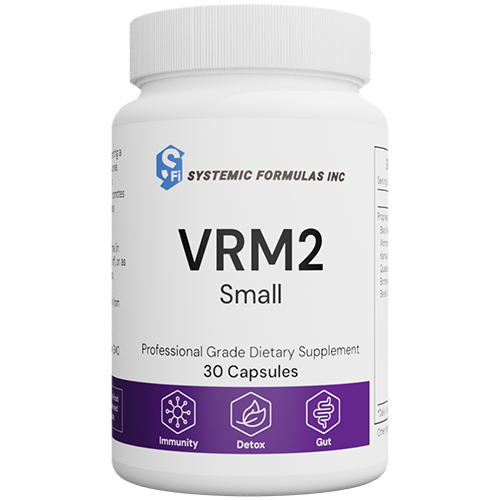
VRM2 – Small
$38.00
Small
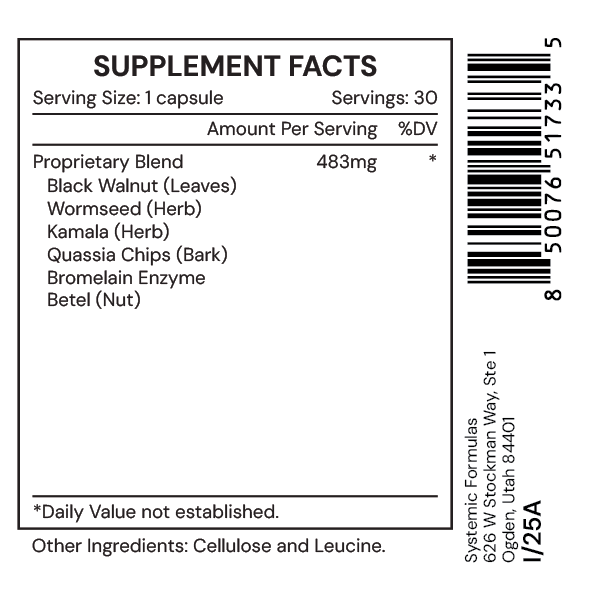
Clinical dose of kamala and whole wormseed herb in a base of black walnut, quassia bark, bromelain, and betel nut.
Description
In Depth
VRM2 is a targeted herbal formula designed to support the body’s natural ability to maintain a balanced microbiome and immune response, particularly in relation to small, thread-like parasitic organisms. This specialized blend aids digestion and promotes the expulsion of unwanted invaders, helping to restore gut integrity and overall well-being.
In the 1970s, renowned researcher Doc Wheelwright explored traditional plant-based solutions across the Brazilian rainforest, Mexican desert, African savannahs, and Asian jungles. His findings led to the development of four distinct formulas, each addressing different parasitic classifications—large, small, micro, and cellular. Decades later, Dr. Shayne Morris revisited and refined this approach, integrating modern scientific insights to streamline the original concept into the groundbreaking Clear 1 µBiomic and Clear 2 µBiomic formulas. Now, clinicians can use the Roadmap protocol as a foundational gut-cleansing strategy, with VRM formulas providing precision support based on clinical data.
Scientific research continues to validate the role of botanical phytoconstituents in supporting a healthy gut environment. The key ingredients in VRM2—such as black walnut, wormseed oil, kamala, quassia, bromelain, and betel nut—work synergistically to create an inhospitable environment for unwanted organisms, promote healthy digestion, and strengthen intestinal resilience. By leveraging these time-tested herbs in a modern formula, VRM2 offers a powerful tool for maintaining gastrointestinal balance and immune function.
Two versions of VRM2:
- VRM2 capsules: Standard encapsulated formula for ease of use.
- CXVRM2 concentrated extract: A highly bioavailable liquid extract for enhanced potency and absorption.
Understanding the VRM formulas:
While Clear 1 µBiomic & Clear 2 µBiomic provide foundational gastrointestinal immune and microbiome support, the VRM formulas allow for targeted enhancements based on clinical evaluations:
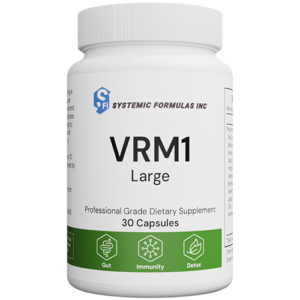
VRM1 – Large: Supports the body in addressing large parasitic species.
VRM2 – Small: Targets smaller, thread-like parasites based on visible signs or symptoms.
VRM3 – Micro: Supports the body’s natural defenses against microscopic, pathogenic species.
VRM4 – Cell: Focuses on cell-invasive and blood-borne parasites, aiding systemic immune support.
Key Features
- Black walnut (Juglans nigra) is known for its wide range of health benefits, including antiparasitic, antibacterial, and anti-inflammatory effects. Scientific studies show that compounds like tannins and juglone found in black walnut are particularly effective against microscopic pathogens such as bacteria, protozoa, and mycobacteria. Additional compounds, including plumbagin and hydroquinone, have been shown to inhibit parasite growth. Research involving animals infected with parasitic worms, like pinworms, hookworms, and tapeworms, found that black walnut extract significantly reduced worm populations. Black walnut also oxygenates the blood, making it less hospitable for blood-borne parasites. The tannins in black walnut create an inhospitable environment by tightening tissues, which helps prevent parasite invasion. Additionally, black walnut’s natural iodine content has strong antimicrobial properties that support the cleansing of the blood and digestive system.
- Kamala (Mallotus philippensis) is a large tree found in Africa, Australasia, and South Asia, with a long history in traditional medicine. The fruit produces a therapeutic fiber used for expelling parasites, while the roots yield a red dye. Kamala has long been recognized for its anthelmintic properties, especially for targeting certain parasitic organisms. Studies show that Kamala is effective against both microscopic and larger migrating pathogens. Its active compounds include tannic acids and volatile oils, which contribute to its effectiveness. Kamala also contains resins, crystallines, flemingin, and homoflemingin, all of which support gut health.
- Maracujá (Passiflora incarnata) is often confused with the culinary passion fruit (Passiflora edulis), but it has distinct uses in Brazilian herbal medicine. The leaves of Maracujá are known for their antiparasitic properties. One study demonstrated that it inhibits the growth of Giardia duodenalis trophozoites, which cause giardiasis, a protozoal infection that leads to diarrhea and inflammation. Maracujá also has anti-inflammatory effects, specifically targeting histamine-mediated reactions, making it valuable for reducing inflammation caused by parasitic infections.
- Wormseed oil, derived from Chenopodium ambrosioides, is highly regarded for its ability to support both the internal and external balance of the body. Topical applications help maintain healthy skin and tissues, while internal use supports a balanced gastrointestinal system. Wormseed oil contains ascaridole, a potent compound that aids in balancing the mycobiome and microbiome. Known for its ability to repel worms, fungi, and pathogenic bacteria, wormseed oil plays a key role in cleansing the intestines and eliminating harmful organisms. It is also used to treat infections and inflammation. Studies published in the Brazilian Journal of Microbiology highlight wormseed oil’s efficacy against bacteria such as Staphylococcus aureus, Enterococcus faecalis, and Pseudomonas aeruginosa, supporting its use as a natural treatment for various infections.
- Sweet wormwood (Artemisia annua) is well-known for its antimicrobial and antiparasitic properties, particularly in traditional Chinese medicine where it is used to treat malaria. In addition to its ability to expel large and small worms, Artemisia annua has been recognized for its broad-spectrum antimicrobial activity. Research has shown that it is effective against tropical, microscopic parasites and can even help combat antibiotic-resistant bacteria like Methicillin-resistant Staphylococcus aureus (MRSA) and Multidrug-resistant Escherichia coli (MDR E. coli). Artemisia compounds work by interacting with the pathogen’s efflux pumps, which contribute to its resistance to antibiotics, helping to restore the efficacy of conventional treatments.
Essential Ingredients
- Black walnut
- Wormseed oil
- Kamala
- Quassia
- Bromelain
- Betel nut
Directions
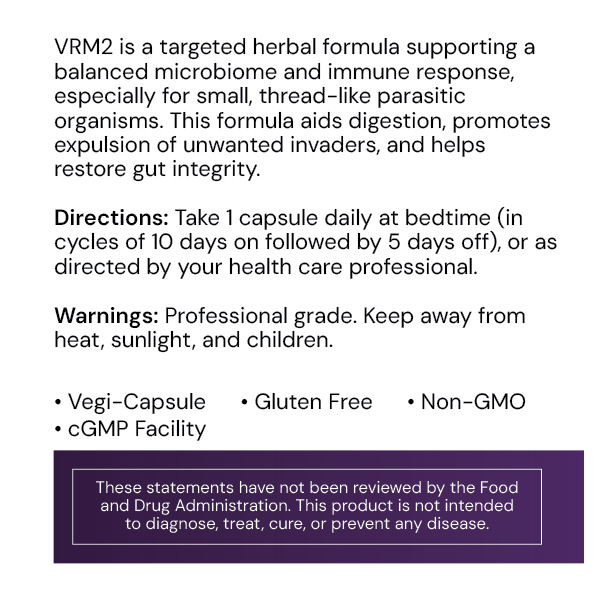
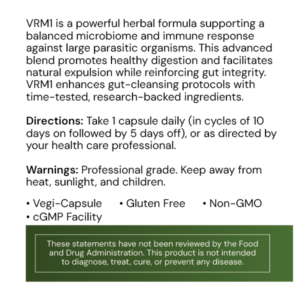
Take 1 capsule daily at bedtime (in cycles of 10 days on followed by 5 days off), or as directed by your health care professional.
Professional grade. Keep away from heat, sunlight, and children.
Quality Guarantee
- cGMP facility
- Non-GMO
- Vegi-capsule
- Gluten Free

Reviews
There are no reviews yet